All posts by Quadros Law Office APC

BEST Immigration Lawyer Near You in Los Angeles

An immigrant receiving the green card from the hands of lawyer Micheli Quadros


Immigration Lawyer in Los Angeles

At Quadros Law Office, our immigration lawyers in California are dedicated to helping individuals, families, and businesses navigate the often complex world of U.S. immigration law. Whether you’re seeking a visa application, green card, or assistance with more specific matters like I-601a waivers or Parole in Place, we provide the legal guidance you need. Our team is committed to ensuring your immigration process is smooth, efficient, and as stress-free as possible.

Immigration Services We Offer:

  • Visa Applications (Including Marriage Visas)
  • Green Card Applications (Including Family-Based Green Cards, I-751 Renewal)
  • Affidavit of Support
  • Request for Evidence (RFE) Responses
  • Parole in Place Application and Eligibility
  • I-601a Waivers or 212(d)(3) Waivers
  • And more…

Our immigration attorneys in Los Angeles are well-versed in the regulatory landscape and work closely with governmental agencies like USCIS to ensure timely and accurate submissions. With our guidance, you can avoid costly delays and complications, maximizing the chances of a favorable outcome.


Solving Immigration Law Problems in Los Angeles

When you contact Quadros Law Office in Los Angeles, CA, you can expect top-tier service from an experienced team of immigration lawyers. We understand how critical it is to resolve immigration issues efficiently, whether you’re applying for a green card, resolving a delayed visa, or dealing with a denied application.

Our attorneys have successfully assisted numerous clients with:

  • Visa approvals
  • Resolving delayed visas
  • Green card application denials
  • Naturalization processes

We take pride in helping families stay together and making it possible for individuals to live, work, and thrive in Los Angeles. Our legal services are designed to address your immediate concerns while ensuring that your long-term immigration goals are met.

What You Can Expect From Quadros Law Office:

  • Attention to detail in every aspect of your case
  • Personalized legal representation
  • Regular updates on your case’s status
  • Thorough explanations of complex legal matters
  • Strategic exploration of all possible avenues for resolution
  • Extensive experience with immigration law
  • Commitment to helping you succeed

If you’re searching for an immigration lawyer in Los Angeles, know that Quadros Law Office is here to provide trusted legal services that deliver successful outcomes for you and your family.


Immigration Law Services in Los Angeles

Immigration law can be complex, especially when legal issues arise that affect your status or that of a loved one. At Quadros Law Office, our immigration lawyers in LA have the expertise and resources to address a wide range of immigration challenges, from helping individuals and families to supporting businesses that employ immigrant workers.

Some of the immigration cases we handle include:

  • Marriage-based green card applications for spouses or fiancés
  • Family-based green card applications for parents, children, or other relatives
  • DACA renewals and temporary protection status (TPS)
  • Removal of conditions on residency
  • VAWA (Violence Against Women Act) petitions
  • Naturalization and citizenship applications

We understand how important your immigration case is, and we are dedicated to helping you navigate the complexities of U.S. immigration law. Our immigration lawyers near you in Los Angeles are available to provide immediate assistance with all your legal needs.


Solving Immigration Law Problems in Los Angeles

According to the Public Policy Institute of California, over 10 million immigrants live in the state, with 3.4 million residing in the Los Angeles area alone. Many of these individuals will face legal challenges related to immigration, from obtaining visas to addressing issues with green card applications.

At Quadros Law Office, our immigration attorneys are committed to providing compassionate and effective legal services to ensure your case is handled with care and urgency. Whether you’re applying for a green card or dealing with immigration delays, we have the experience and knowledge to protect your rights.

Why Choose Quadros Law Office?

  • Experienced legal team with deep knowledge of U.S. immigration laws
  • Tailored legal strategies that fit your specific situation
  • Personalized service focused on your long-term goals
  • Trusted representation when you need it most

📍 Visit us: 453 S Spring Street, Los Angeles, California — 90013


Our immigration lawyers are ready to assist you with all aspects of immigration law, ensuring that your journey toward residency or citizenship is as smooth as possible.

📞 WhatsApp Message and Office Calls: 213 603 0000

💬 Text Messages: 213 884 8300

✉️ E-mail: info@quadroslawoffice.com

🌐 Website: www.quadroslawoffice.com


Contact Us for Immigration Assistance Today

At Quadros Law Office, we are proud to serve immigrants and their families in Los Angeles and throughout California. Whether you’re facing immediate legal challenges or planning for long-term immigration goals, we are here to help. Don’t wait until it’s too late to resolve your immigration issues—contact our team today to find out how we can assist you in achieving your U.S. immigration goals.

Reach out to Quadros Law Office and take the first step toward a successful resolution for you and your family!


Citizenship: Why Appealing the Denial of Your N-400 Might Be a Bad Strategy

High angle view of unrecognizable woman applying for visa in embassy office giving passport and application form to consular officer

The path to U.S. citizenship through Form N-400—Application for Naturalization—is a significant journey that many immigrants embark on after years of legal residency. After investing time, money, and hope into the process, receiving a denial of your N-400 can feel devastating. The immediate response for many is to consider filing an appeal to reverse the decision, thinking this will quickly solve the problem. However, appealing an N-400 denial may not always be the best strategy, and it could lead to more frustration and delays.

There are specific circumstances where an appeal makes sense, but more often than not, it’s not the most effective course of action. In this article, we’ll explore why appealing an N-400 denial might not work in your favor, what alternatives you should consider, and how to make better decisions to fast-track your citizenship process. Understanding the immigration landscape can help you avoid unnecessary complications and get closer to achieving your dream of becoming a U.S. citizen.


Why Was Your N-400 Denied?

Before you consider appealing, it’s essential to understand why your N-400 was denied in the first place. The U.S. Citizenship and Immigration Services (USCIS) may deny naturalization applications for several reasons, including:

  • Failing the English language or civics test
  • Lack of continuous or physical presence in the U.S.
  • Criminal history or unlawful acts
  • Incomplete or inaccurate application
  • Failing to meet the Good Moral Character requirement

Understanding Your Denial Notice

When you receive a denial notice from USCIS, it should provide specific reasons for the denial. Review this notice carefully before taking any action. In many cases, the reasons for denial may stem from issues that could be more easily corrected through refiling rather than going through the lengthy appeals process.

If the denial was based on administrative errors or misunderstanding of your application, you might think that an appeal will set things right. But here’s where the process gets tricky: appealing an N-400 denial typically means you’re asking for a review of the same facts and information that led to your initial rejection. Without significant new evidence, the outcome is likely to remain the same.


The Appeal Process: Why It’s Not Always the Best Option

Time-Consuming and Costly

One of the primary downsides of appealing an N-400 denial is the time it takes. Filing an appeal requires you to submit Form N-336, Request for a Hearing on a Decision in Naturalization Proceedings. The appeal process can take many months, sometimes over a year, depending on USCIS backlogs. Meanwhile, you’re stuck waiting for a new decision with no guarantee of approval.

Additionally, filing an appeal comes with its own set of fees and costs. This can become burdensome, especially when there are other, faster ways to resolve the issue and reapply for citizenship.

Limited Success Rates

Another reason why appealing may not be the best course of action is the low success rate. Unless you have compelling new evidence to overturn the decision, your appeal might just end in another denial. In cases where the denial is due to test failure or minor discrepancies in your application, refiling your N-400 is often a much faster and more successful approach.


What Are the Alternatives to Appealing an N-400 Denial?

Refile Your N-400 Application

In many cases, refiling your N-400 application is the better strategy. Rather than waiting for an appeal that may not work in your favor, refiling allows you to address the specific issues that caused the denial in the first place. For example, if the denial was due to missing documents or a failed test, you can prepare more thoroughly and submit a stronger application the second time around.

Reapplying also allows you to correct any mistakes or clarify any points of confusion that USCIS had with your original submission. The refiling process is usually quicker than an appeal, giving you a faster route to resubmitting your case for consideration.

Request a New Naturalization Test Appointment

If your N-400 denial was due to failing the English language or civics test, you’re allowed to retake the test. Instead of appealing, requesting another appointment for the test can be a straightforward way to continue the naturalization process. Study diligently and prepare for the retake to ensure you pass on your next attempt.

This option is particularly useful for applicants who were well-qualified for citizenship but faced difficulties during the test, which is a common scenario. The retake process is far quicker than waiting for the resolution of an appeal, allowing you to move forward without unnecessary delays.

Fix Documentation or Other Administrative Errors

If the denial was based on incomplete or inaccurate documentation, addressing these issues and refiling your application can save time. Often, USCIS denials stem from technical errors, such as missing paperwork or misunderstood details. By carefully reviewing your denial notice and resubmitting a more complete and clear application, you increase your chances of success the second time.


When Might an Appeal Be the Right Strategy?

While appealing isn’t always the best option, there are certain circumstances where it could be beneficial. If the denial was based on what you believe to be a wrongful interpretation of the law or factual errors, an appeal might be appropriate. In such cases, it’s crucial to present strong, new evidence that wasn’t included in your initial submission.

For instance, if your denial stemmed from USCIS questioning your Good Moral Character due to past events, and you have new evidence to demonstrate that you meet the requirement, an appeal might be worthwhile. However, this path is usually most effective when there is a clear legal basis for challenging the denial.


Conclusion

Receiving an N-400 denial is undoubtedly disappointing, but immediately appealing the decision might not be the most effective way to proceed. While it may seem like the quickest way to resolve the issue, the appeal process can be slow, costly, and often unsuccessful. In many cases, refiling your application, retaking the naturalization test, or correcting documentation errors is a faster and more productive approach.

If you’re unsure whether to appeal or refile, it’s essential to seek professional guidance. At Quadros Law Office, we can help you navigate your N-400 denial and determine the best course of action for your situation. Contact us today to discuss your case and ensure you’re on the right path to U.S. citizenship.


📞 WhatsApp Message and Office Calls: 213 603 0000

💬 Text Messages: 213 884 8300

✉️ E-mail: info@quadroslawoffice.com

🌐 Website: www.quadroslawoffice.com

📍 Visit us: 453 S Spring Street, Los Angeles, California — 90013

NVC Case Status: 3 Steps to Beat an NVC Delay

US immigration application and consular visa interview

Delays in the visa process can be incredibly frustrating, especially when you’re eagerly waiting to reunite with a loved one. The National Visa Center (NVC) plays a crucial role in handling visa petitions, and unfortunately, NVC delays can sometimes drag on longer than expected. When these delays happen, they can feel like insurmountable obstacles standing between you and your family.

But here’s the good news: there are strategies you can implement to beat an NVC delay and fast-track your  visa approval. Knowing the right steps can make all the difference, helping you navigate the often-complex immigration system with ease and efficiency. In this article, we’ll walk you through three practical steps you can take to speed up the process and get your  visa moving along faster. Read on to learn how to take control and avoid getting stuck in the waiting game.


Step 1: Ensure All Documents Are Complete and Accurate to Avoid NVC Delays

The first step to avoiding or reducing NVC delays is ensuring that all your documents are complete and accurate before they even reach the NVC. Any errors or omissions can result in long delays as the NVC requests additional information or documentation, which can cause your  visa application to be put on hold.

Double-Check Required Documents to Minimize NVC Delays

Before submitting the visa petition to the NVC, double-check the list of required documents. These typically include:

  • Birth certificates
  • Marriage certificates
  • Affidavits of support (Form I-864)
  • Police clearance certificates
  • Financial documents (tax returns, pay stubs, etc.)

Review each document carefully to make sure they meet the NVC’s specifications. For instance, some documents may need to be translated if they are not in English, and translations should be certified. Missing or incorrect documents are one of the most common reasons for delays, so this step is crucial.

Address Potential Red Flags Early to Avoid NVC Delays

If there are any potential red flags in your mother’s visa application—such as incomplete documentation, prior visa denials, or discrepancies in the information provided—it’s essential to address these issues proactively. By providing extra evidence or clarification upfront, you can prevent the NVC from issuing requests for further documentation, which can significantly delay the process.


Step 2: Expedite the Process and Overcome NVC Delays with an Expedite Request

One way to beat an NVC delay is by filing a formal request to expedite the processing of your  visa. This isn’t something the NVC grants lightly, but under certain circumstances, your request could be approved, speeding up the entire process.

When Can You Request Expedited Processing to Avoid NVC Delays?

The NVC will consider an expedite request if there are compelling humanitarian reasons or extreme urgency involved. Common reasons for expediting include:

  • A serious medical condition requiring immediate treatment in the U.S.
  • Threats to personal safety or well-being in the applicant’s current country of residence
  • A family emergency that necessitates faster reunification

If your mother’s situation involves any of these, you can file a request with the NVC explaining why expedited processing is necessary. Be sure to include supporting documentation, such as medical records, police reports, or letters from relevant authorities.

How to File an Expedite Request and Overcome NVC Delays

To file an expedite request, you can submit it directly to the NVC via their online public inquiry form. In your request, provide clear reasons and any supporting evidence that justifies why the process should be expedited. If approved, your visa application will be processed faster than standard cases, helping you overcome the typical NVC delays.


Step 3: Use a Congressional Inquiry to Beat NVC Delays

Sometimes, despite your best efforts, delays at the NVC can still occur. In such cases, contacting your local U.S. congressional representative may be the key to fast-tracking your  visa. Many people are unaware that congressional offices have dedicated staff members who handle immigration matters and can intervene to help speed up delayed visa cases.

How a Congressional Inquiry Can Help Resolve NVC Delays

When you contact your congressional representative, they can submit an inquiry on your behalf to the NVC, which often results in quicker responses and faster processing. In many cases, the NVC will give special attention to visa applications that come with a congressional inquiry, as it signifies that the case is being closely monitored.

Steps to Contact Your Representative to Resolve NVC Delays

To initiate this process, find your congressional representative’s contact information and request assistance with your  visa delay. Be prepared to provide your visa case number, your  personal details, and any relevant documentation about the case. While this step won’t guarantee immediate results, it can often provide the extra push needed to resolve prolonged NVC delays.


Conclusion

Navigating NVC delays can be stressful, but by being proactive and following these three steps, you can significantly reduce the time it takes for your  visa to be processed. Ensuring that your documents are complete and accurate from the start is critical to avoiding unnecessary delays. If her case is urgent, consider submitting an NVC expedite request. And if you find yourself stuck in an extended delay, don’t hesitate to reach out to your U.S. congressional representative for help.

At Quadros Law Office, we understand how important family reunification is, and we’re here to assist you every step of the way. Whether you’re just starting the visa application process or dealing with an NVC delay, our team can provide the guidance you need to fast-track your visa. Reach out to us today to ensure that your family’s immigration journey is as smooth and efficient as possible.


📞 WhatsApp Message and Office Calls: 213 603 0000

💬 Text Messages: 213 884 8300

✉️ E-mail: info@quadroslawoffice.com

🌐 Website: www.quadroslawoffice.com

📍 Visit us: 453 S Spring Street, Los Angeles, California — 90013


Can a Green Card Be Revoked Upon Divorce?

a shot of divorce words

Marriage to a U.S. citizen often opens the door to permanent residency through a Green Card, but what happens if the marriage ends in divorce? Does your legal status in the United States get revoked, or can you retain your Green Card despite the end of the marriage? These questions are crucial for anyone navigating the complexities of the U.S. immigration system after a significant life change like divorce.

Divorce can create uncertainty, especially if you hold a conditional Green Card based on a recent marriage. While your immigration status may not be automatically revoked, the situation depends on several factors, including the type of Green Card you hold and how long you’ve been married. Understanding the relationship between divorce and your Green Card status can help you make informed decisions and take proactive steps to secure your residency. In this article, we’ll explore whether a Green Card can be revoked upon divorce, the impact of conditional residency, and the options available to protect your legal status.


Conditional vs. Permanent Green Card: What’s the Difference?

The first factor to consider when assessing how divorce affects your Green Card status is the type of residency you hold.

Conditional Green Card

If you received a Green Card through marriage and have been married for less than two years at the time of issuance, you likely hold a conditional Green Card. This card is valid for two years and requires you to file Form I-751 to remove the conditions and secure permanent residency. The conditional status exists to ensure the marriage is legitimate and not just for immigration purposes.

Permanent Green Card

On the other hand, if you’ve been married for over two years, you likely received a 10-year Green Card. Divorce does not usually affect the status of this card, though it can raise questions during renewal or if USCIS suspects fraud.


Divorce and Conditional Green Card: Can It Be Revoked?

If you hold a conditional Green Card, divorce can complicate the process of becoming a permanent resident. However, it doesn’t necessarily mean your Green Card will be revoked. Here’s what you need to know:

Filing Form I-751 After Divorce

Under normal circumstances, couples with a conditional Green Card must file Form I-751 jointly to remove the conditions. But if you get divorced before filing, you’ll need to file Form I-751 on your own and request a waiver of the joint filing requirement. In this situation, it’s critical to prove that the marriage was entered into in good faith, not solely for immigration purposes.

To support your case, you should gather substantial evidence showing that your relationship was genuine. This may include:

  • Joint leases or mortgage agreements
  • Joint bank accounts or financial records
  • Photos together over the course of the marriage
  • Statements from friends or family verifying the legitimacy of the marriage

The key is to demonstrate that the marriage wasn’t fraudulent, even though it ended in divorce. USCIS will carefully review your case, and you may be required to attend an interview to provide additional information.

Fraud and Green Card Revocation

If USCIS determines that the marriage was fraudulent—meaning it was entered into solely for immigration benefits—your Green Card can be revoked. Fraud investigations often occur after a divorce, especially if there are signs that the relationship was not genuine. In such cases, revocation can lead to removal (deportation) proceedings.


Permanent Green Card Holders: What Happens After Divorce?

For those with a permanent 10-year Green Card, divorce is less likely to result in revocation. However, it could still impact your immigration status in specific circumstances.

Divorce During Green Card Renewal

When it’s time to renew your Green Card, USCIS may ask questions about the current status of your marriage, particularly if the original Green Card was based on marriage to a U.S. citizen. While a divorce alone is not grounds for revocation, it may trigger additional scrutiny from USCIS to ensure that your marriage was legitimate at the time of issuance.

If USCIS suspects that your marriage was fraudulent, you may be required to provide additional documentation to prove its authenticity. However, as long as your marriage was entered into in good faith, divorce should not prevent you from renewing your Green Card.


What If You Remarry?

Another important consideration is what happens if you remarry after your divorce. If you are a conditional resident, remarrying before filing Form I-751 could raise red flags with USCIS. This is because it might suggest that your first marriage was not genuine. If you are in this situation, it’s essential to work with an experienced immigration attorney to ensure that your case is handled correctly.

For permanent Green Card holders, remarrying generally does not affect your residency status, although it could impact future immigration benefits, such as applying for citizenship or sponsoring a new spouse for their own Green Card.


How to Protect Your Green Card Status After Divorce

Divorce is a significant life event, but it doesn’t have to jeopardize your immigration status if handled properly. Here are a few steps you can take to protect your Green Card status:

Gather Evidence of Your Marriage

As soon as you receive your conditional Green Card, begin compiling evidence that proves your marriage is genuine. This documentation will be crucial if you need to file Form I-751 after a divorce.

File Form I-751 Early

If you are approaching the two-year mark of your conditional residency and your marriage is in jeopardy, it’s advisable to file Form I-751 as soon as possible. Filing early can help avoid complications if a divorce is imminent.

Seek Legal Assistance

If you’re unsure about how your divorce will impact your Green Card status, it’s wise to consult with an immigration attorney. They can guide you through the process and help ensure that your rights are protected.


Conclusion

While divorce can complicate your immigration status, it does not automatically result in the revocation of your Green Card. For conditional residents, filing Form I-751 and proving that your marriage was genuine are essential steps toward securing permanent residency. For permanent residents, divorce is less likely to affect your status, though it may lead to increased scrutiny during Green Card renewal.

If you’re facing divorce and concerned about how it might impact your Green Card, don’t wait to seek help. Contact Quadros Law Office today for expert legal guidance on protecting your immigration status and navigating the complexities of U.S. immigration law.

📞 WhatsApp Message and Office Calls: 213 603 0000

💬 Text Messages: 213 884 8300

✉️ E-mail: info@quadroslawoffice.com 

🌐 Website: www.quadroslawoffice.com 

📍 Visit us: 453 S Spring Street, Los Angeles, California – 90013

How to Renew Your Green Card and Remove Conditional Status

Application for a green card on a desk top

Navigating the Green Card renewal process can be a bit overwhelming, especially when it comes to removing conditional status. Whether you are a permanent resident seeking to renew your 10-year Green Card or a conditional resident working to remove conditions on your status, the process is critical for maintaining your lawful status in the United States. Without proper action, you could face delays, complications, or even loss of residency.

Understanding the difference between renewing a standard Green Card and removing conditions on a conditional Green Card is essential. Each scenario has distinct procedures and timelines, and failing to comply with these requirements can lead to serious issues. In this article, we will dive into everything you need to know about these two processes, ensuring you have the knowledge to stay on top of your legal responsibilities. Read on to learn how to efficiently handle these important milestones in your immigration journey.


Renewing a 10-Year Green Card

A Green Card is typically issued with a 10-year validity period for lawful permanent residents. When it’s time for Green Card renewal, you should not delay in starting the process. It’s advisable to apply for renewal within six months of the expiration date to avoid complications. Here’s what you need to know:

Step 1: Check Your Green Card’s Expiration Date

Your Green Card is your proof of permanent residency, and an expired card can create problems when traveling, seeking employment, or proving your status to authorities. Check your card regularly, and set reminders as your expiration date approaches. Remember, renewing on time ensures continuous documentation and legal protection.

Step 2: Filing Form I-90

The renewal process for a 10-year Green Card begins with Form I-90, Application to Replace Permanent Resident Card. You can file this form online or by mail, but filing online is often quicker and easier. After submission, you will receive a receipt notice that allows you to track the status of your application.

During this time, you might also be asked to attend a biometrics appointment, where the U.S. Citizenship and Immigration Services (USCIS) will collect your fingerprints, photograph, and signature. This is a routine part of the process to confirm your identity.

Step 3: Processing Time and What to Expect

On average, Green Card renewal can take several months, depending on current USCIS backlogs. While waiting, you may receive an extension on your expired Green Card through a receipt notice. Keep in mind that traveling outside the U.S. during the renewal process can lead to complications, so plan accordingly.


Removing Conditional Status

Conditional Green Cards are typically issued to individuals who have obtained residency through marriage or certain investment visas. These cards are valid for only two years and require action before they expire to remove the conditions and obtain a permanent Green Card.

Step 1: File Form I-751 on Time

If you received your Green Card based on marriage and it was issued for two years, you must file Form I-751, Petition to Remove Conditions on Residence, within the 90 days before your conditional Green Card expires. This form is crucial in transitioning from a conditional resident to a permanent resident.

Step 2: Supporting Documentation

When filing Form I-751, it is important to provide evidence that your marriage is bona fide (genuine) and not entered into for immigration purposes. This can include joint leases, bank statements, tax returns, and photos together. If you are filing jointly with your spouse, both of you must sign the form. However, in cases of divorce or abuse, you may file a waiver to request individual consideration.

Step 3: Biometrics and Interview

Similar to the renewal process, you may need to attend a biometrics appointment, and USCIS may require an interview to verify the legitimacy of your marriage. The interview is an important part of the process, and being well-prepared with all the necessary documents can make a difference in your case.


What Happens If You Fail to Renew or Remove Conditions?

Failing to renew your Green Card or remove the conditional status on time can result in serious legal consequences. You may lose your lawful permanent resident status, face deportation, or be unable to work or travel freely. It’s important to stay proactive and complete all necessary steps in a timely manner.

Moreover, complications can arise if you are outside the U.S. with an expired or conditional Green Card. Without proper documentation, re-entry into the U.S. can be denied, putting your status in jeopardy. Always plan ahead, ensuring that your Green Card is up to date before making any international travel plans.


Conclusion

Renewing your Green Card or removing conditions from your status doesn’t have to be overwhelming if you stay informed and act promptly. By following the correct steps, filing the right forms, and gathering appropriate documents, you can navigate this process smoothly. Ensuring your status remains up to date is not just about legal requirements but also about preserving your peace of mind.

If you are unsure about any part of the process or need assistance, Quadros Law Office is here to help. Our team is well-versed in U.S. immigration laws and can guide you through the steps for renewing your Green Card or removing conditions. Contact us today to ensure your residency is secure and your future in the U.S. is protected.


📞 WhatsApp Message and Office Calls: 213 603 0000  

💬 Text Messages: 213 884 8300  

✉️ E-mail: info@quadroslawoffice.com  

🌐 Website: www.quadroslawoffice.com  

📍 Visit us: 453 S Spring Street, Los Angeles, California – 90013  

Financial Requirement for a Marriage Visa

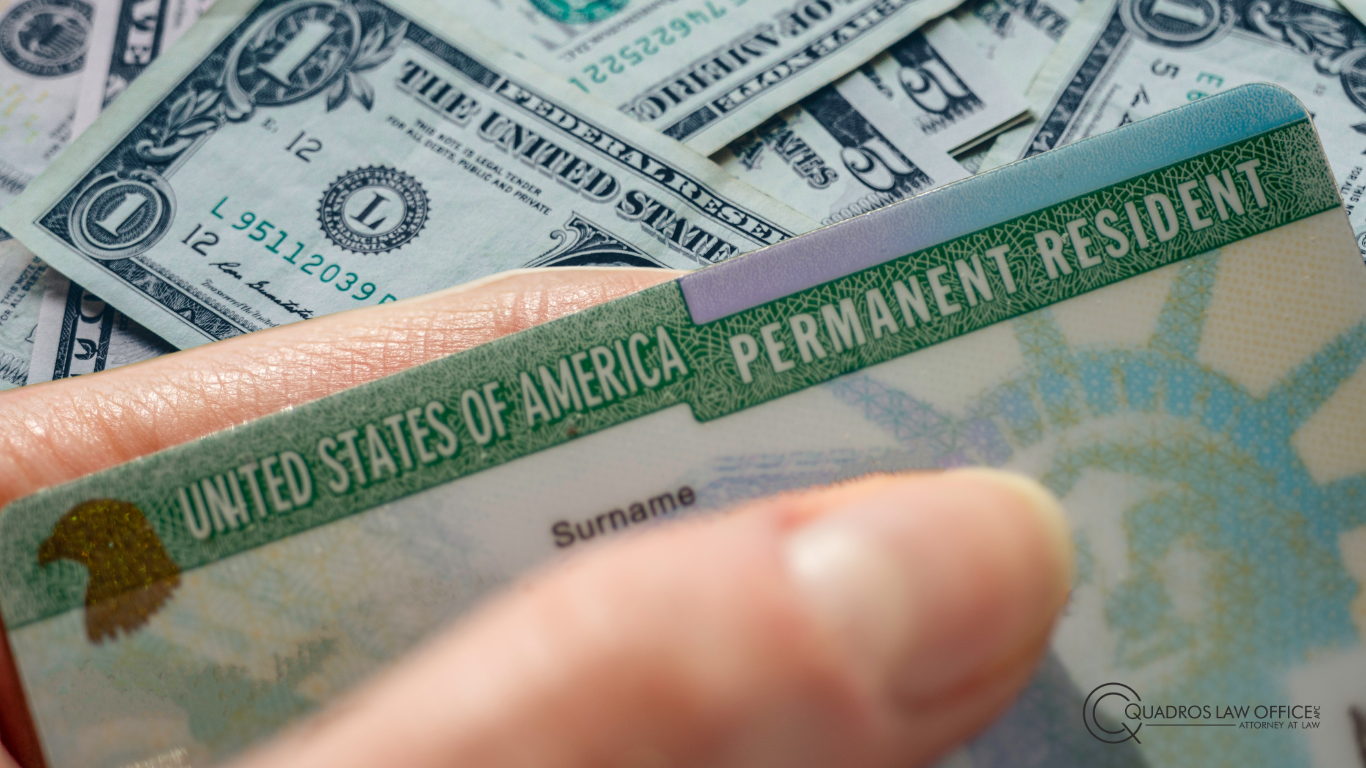
Close up view of Fragment of Permanent resident card (Green) card of USA on blurred background.
 

Understanding the financial requirement for a marriage visa is crucial if you’re sponsoring a spouse for a green card. Sponsors must meet specific income guidelines to ensure financial support for the immigrant spouse. These requirements are based on the U.S. Federal Poverty Guidelines.

Income Requirements for Green Card Sponsors

The primary financial requirement for a marriage visa is that the U.S. citizen or permanent resident sponsor must prove an income of at least 125% of the Federal Poverty Guidelines. For a household of two, this equates to an income of $25,550 per year. The goal is to demonstrate that the sponsor can financially support their spouse without relying on public benefits.

What Happens If You Don’t Meet the Income Requirement?

If your income is below the required threshold, you have several options:

  1. Combine Household Income: You can include the income of other household members in your calculation.
  2. Use Assets: You can also combine your income with your assets or those of the immigrant spouse.
  3. Find a Joint Sponsor: A joint sponsor is another U.S. citizen or permanent resident willing to take financial responsibility for your spouse.

For a more detailed breakdown of income requirements, you can visit the official USCIS Poverty Guidelines.

How Are the Income Levels Calculated?

The poverty guidelines vary depending on household size and state. The larger your household, the higher the income you must prove. If you live in Alaska or Hawaii, the required income is slightly higher due to differences in the cost of living. You can check the current USCIS guidelines here.

Supporting documents to prove financial requirements for a marriage Visa

To prove your income, you must submit various documents, including:

  • Recent tax returns
  • Pay stubs
  • Employment letters
  • Bank statements (if using assets)

Importance of Meeting the Financial Requirement

Meeting the financial requirement for a marriage visa ensures that the immigrant spouse will not become a public charge, which can negatively affect the green card application. If you fail to meet this requirement, the petition may be denied or delayed.

Conclusion: Navigating the Marriage Visa Process

Ensuring you meet the financial requirement for a marriage visa is an important step in your spouse’s green card application. The process can be complex, but having the right legal guidance can make all the difference.

Contact Quadros Law Office today to receive personalized assistance with your marriage visa application and ensure a smooth process. Let us help you take the next step toward securing your family’s future in the U.S.

📞 WhatsApp Message and Office Calls: 213 603 0000

💬 Text Messages: 213 884 8300

✉️ E-mail: info@quadroslawoffice.com

🌐 Website: http://www.quadroslawoffice.com

📍 Visit us: 453 S Spring Street, Los Angeles, California – 90013


Litigation Following N-336 Denial: What You Need to Know

N-400 Application for Naturalization and Certificate of Naturalization Lies on United States Flag with Blue Pen from Department of Homeland Security

Litigation following N-336 denial can be a challenging and complex process. If your naturalization application was denied, and your request for a hearing (N-336) was also unsuccessful, you may have legal options to continue your fight for U.S. citizenship. In this article, we’ll explore what the Form N-336 is, why it can be denied, and the legal steps you can take after receiving a denial.

What Is Form N-336?

Form N-336, officially called the “Request for a Hearing on a Decision in Naturalization Proceedings”, allows an applicant to appeal a denied naturalization application. If your Form N-400 (Application for Naturalization) was denied by USCIS, you can file Form N-336 to request a hearing with an immigration officer.

This process gives you the opportunity to present additional evidence and argue why the original decision was incorrect. However, if your N-336 is also denied, you may need to consider litigation in federal court.

Why Does the N-336 Get Denied?

There are several reasons why the N-336 may be denied, including:

  • Insufficient evidence to support your eligibility for naturalization.
  • Failure to meet residency or good moral character requirements.
  • Errors or omissions in your original N-400 application.

If your appeal fails, you may need to explore litigation following N-336 denial.

What Happens After an N-336 Denial?

When USCIS denies your N-336 request, the next step could be filing a lawsuit in federal district court. This legal action is known as judicial review under Section 310 of the Immigration and Nationality Act (INA).

Step 1: Judicial Review in Federal Court

You can file a petition in federal district court to have a judge review the denial of your naturalization application. The judge will consider the evidence presented during your immigration process and can make an independent decision. This is often the final step for applicants facing a denial after the N-336 hearing.

Step 2: Litigation Process

The litigation following N-336 denial can take several months. During this time, both sides present their arguments and evidence. The court may conduct a hearing and make a final ruling on your eligibility for U.S. citizenship.

Factors Considered in Court

  • Factual disputes regarding eligibility criteria.
  • Application of law and whether USCIS made any errors in its interpretation.
  • New evidence that may have been overlooked or not presented in earlier stages.

Tips for Handling Litigation After N-336 Denial

  • Consult with an immigration attorney to understand your legal rights and how to proceed with litigation.
  • Keep all documentation organized, including your N-400, N-336, and evidence submitted to USCIS.
  • Stay informed about immigration policies, as they can change and impact your case.

How Quadros Law Office Can Assist You

Litigation following N-336 denial can be complex, but it’s not the end of your naturalization journey. At Quadros Law Office, we are committed to helping you through each step of the process. Whether you are preparing for a federal court review or looking for guidance on how to proceed after an N-336 denial, we are here to assist you.

If you’re facing a denied naturalization application, contact Quadros Law Office today. We’ll help you navigate your case and work toward the best possible outcome.

📞 WhatsApp Message and Office Calls: 213 603 0000  

💬 Text Messages: 213 884 8300  

✉️ E-mail: info@quadroslawoffice.com  

🌐 Website: www.quadroslawoffice.com  

📍 Visit us: 453 S Spring Street, Los Angeles, California – 90013  


How Long Does It Take for Form I-130 to Be Approved?

1-130 Petition for Alien Relative Blank Form Lies on United States Flag with Blue Pen from Department of Homeland Security

Form I-130 wait time is a crucial factor for families seeking to reunite through the U.S. immigration system. If you’re in the process of petitioning for a family member, it’s essential to understand the approval timeline. This article breaks down current processing times, factors that affect them, and how to navigate the process efficiently.

What Is Form I-130?

Form I-130, also called the “Petition for Alien Relative,” is used by U.S. citizens or lawful permanent residents to prove a family relationship with a relative who wants to immigrate. It’s the first step in family-based immigration and confirms that the relationship is valid. However, it doesn’t provide immigration status by itself. Once Form I-130 is approved, additional steps follow depending on the relative’s location and circumstances.

Form I-130 Wait Time: What to Expect

The Form I-130 wait time varies based on several factors. These include the service center handling the petition, the type of family relationship, and the country where the relative resides. On average, processing can take between 6 to 12 months. Always check the USCIS website for the latest updates.

Factors That Can Affect Form I-130 Wait Time

Several factors influence how long it takes for Form I-130 to process:

  • Relationship Type: Immediate relatives, like spouses and children under 21, typically have shorter wait times. Other family members fall under different preference categories, which may take longer.
  • Service Center Location: USCIS service centers handle different volumes of petitions, which can affect processing times. Use the USCIS tool to check current times for your assigned center.
  • Country of Beneficiary: Some countries experience longer wait times due to high demand and visa limitations.

Step-by-Step Process After I-130 Approval

Once USCIS approves your Form I-130, the next steps depend on whether your relative is in the U.S. or abroad.

  1. For relatives in the U.S.: They may be able to apply for adjustment of status using Form I-485. This allows them to apply for a green card without leaving the country.

  2. For relatives abroad: They will go through consular processing. This means your petition will be forwarded to the National Visa Center (NVC) and later to a U.S. embassy or consulate in the beneficiary’s country.

Tips to Minimize Delays

You can’t avoid all delays, but some actions may help reduce processing time:

  • Submit a complete application: Make sure to include all forms, fees, and required documents. Missing information often causes delays.
  • Track your case online: Use the receipt number provided by USCIS to check your case status regularly.
  • Stay updated: Follow changes in immigration policies, as they may affect your petition.

Why Timing Matters

Understanding the Form I-130 wait time is critical. Delays can affect your plans, especially if you’re petitioning for a spouse or child. It’s essential to prepare for additional steps like applying for work permits, travel documents, and visa interviews. Managing expectations by staying informed can help avoid unnecessary stress.

How Quadros Law Office Can Help

Navigating the Form I-130 process can be complex. At Quadros Law Office, we guide you through every step, ensuring that your petition proceeds efficiently. Our team is ready to answer your questions, provide personalized advice, and help avoid mistakes that may delay your case.

Contact Quadros Law Office today for help with your family immigration journey. We’re here to ensure you take the right steps toward reuniting with your loved ones in the U.S.

📞 WhatsApp Message and Office Calls: 213 603 0000  

💬 Text Messages: 213 884 8300  

✉️ E-mail: info@quadroslawoffice.com  

🌐 Website: http://www.quadroslawoffice.com  

📍 Visit us: 453 S Spring Street, Los Angeles, California – 90013  


Is it possible to continue my Green Card renewal indefinitely?

green card application approved

Having a Green Card is the dream of many immigrants in the United States as it grants the status of legal permanent resident and the right to live and work in the country. A common question is: Can I continue to renew my Green Card indefinitely? The answer is yes, but there are important conditions to meet for a smooth renewal process. In this article, we will explore the rules, the renewal process, and the reasons why you might face denial or revocation of your Green Card.

What is a Green Card?

The Green Card, officially known as the Permanent Resident Card, is a document that allows immigrants to live and work permanently in the United States. While the Green Card grants many benefits, it does not offer the same rights as citizenship. Green Card holders must still follow specific rules to maintain their status.

How Long is a Green Card Valid?

Most Green Cards are valid for 10 years, while those issued due to a recent marriage or investment last 2 years (conditional Green Card). At the end of this period, the holder must renew the document to maintain permanent resident status.

Can You Renew Your Green Card Indefinitely?

Yes, you can renew your Green Card indefinitely as long as you meet the requirements set by U.S. immigration law. Green Card renewal is not automatic; it requires applying for renewal using Form I-90 (Application to Replace Permanent Resident Card) on the official USCIS (U.S. Citizenship and Immigration Services) website.

Requirements for Green Card Renewal

To renew your Green Card, you must meet some essential requirements:

  1. Maintain Your Permanent Resident Status: You need to continue residing in the United States. Long absences without justification can lead to losing your status.
  2. No Serious Convictions: Serious crimes can make you ineligible for Green Card renewal. Consult an immigration attorney if you have a criminal record.
  3. Apply for Renewal On Time: Apply for renewal about six months before your Green Card expires. This timing helps you avoid issues with your status during processing.
  4. Pay Required Fees: Green Card renewal requires paying administrative fees that may change over time. Always check the current amount on the USCIS website.

Green Card Renewal Process

  1. Fill Out Form I-90: The first step is completing Form I-90, available on the USCIS website. You can fill out the form online or mail it.
  2. Submit Documentation: Along with the form, submit a copy of your current Green Card and any other documents USCIS requires.
  3. Biometrics Appointment: You will be scheduled for a biometrics appointment during the renewal process, where they will collect your fingerprints and photos.
  4. Await the Decision: After you submit your application, USCIS reviews your case. If everything is correct, you receive the new Green Card by mail.

Reasons Why Renewal May Be Denied

Though Green Card renewal is usually straightforward, there are reasons why you might face denial:

  • Criminal Record: Certain crimes, especially those related to drugs or violence, can result in denial of renewal.
  • Prolonged Absences: Spending more than a year outside the United States without a Reentry Permit may suggest that you have abandoned your permanent resident status.
  • False Statements: Providing false information on your application can lead to denial and loss of the Green Card.

Benefits of Regularly Renewing Your Green Card

Renewing your Green Card regularly helps you maintain the benefits it provides:

  • Right to Live and Work: Keeping your Green Card up to date allows you to live and work legally in the United States without restrictions.
  • Access to Social Benefits: Permanent residents qualify for benefits like Social Security, medical assistance, and other government programs.
  • Eligibility for Citizenship: Over time, many permanent residents choose to become U.S. citizens. Having a current Green Card is required to qualify for citizenship.

Citizenship: An Alternative to Continuous Green Card Renewal

If you are tired of the continuous Green Card renewal process, consider applying for U.S. citizenship. Citizenship eliminates the need for Green Card renewal and offers additional rights, such as voting and greater protection against deportation.

Conclusion

You can continue to renew your Green Card indefinitely as long as you meet the legal requirements and respect deadlines. Keeping your permanent resident status updated is essential to secure your right to live and work in the United States. However, if you wish to avoid ongoing renewals, consider citizenship as a way to ensure your permanent stay in the U.S.

Do you have questions about renewing your Green Card or need assistance with your immigration process? Quadros Law Office is here to help you maintain your permanent resident status in the U.S. with confidence and peace of mind. Contact us today for a consultation and learn how we can guide you through every step of your path to permanent residency and citizenship. Schedule your consultation now!

📞 WhatsApp Message and Office Calls: 213 603 0000  

💬 Text Messages: 213 884 8300  

✉️ E-mail: info@quadroslawoffice.com  

🌐 Website: www.quadroslawoffice.com  

📍 Visit us: 453 S Spring Street, Los Angeles, California – 90013  

Formas Automáticas de Obtener la Ciudadanía Americana: Explicación Clara y Directa

an office desk with a step-by-step checklist for obtaining a green card

Muchas personas creen que si eres ciudadano estadounidense y tienes hijos fuera del país, ellos automáticamente obtendrán la ciudadanía americana. Sin embargo, las reglas de los Estados Unidos son distintas a las de otros países. Aquí te explicamos las dos principales formas de obtener la ciudadanía americana de manera automática.

1. Ciudadanía Automática o Derivada

Esta ciudadanía se transmite a los hijos a través de los padres ciudadanos. Para que un niño nacido fuera de los EE.UU. obtenga esta ciudadanía, deben cumplirse estos requisitos:

  • Tener un padre o madre ciudadano americano (no importa si es de nacimiento o por naturalización).
  • El niño debe haber nacido fuera de los EE.UU.
  • El padre o madre ciudadano debe haber vivido al menos 5 años en los EE.UU. antes del nacimiento, de los cuales 2 años deben ser después de los 14 años.

Si no cumples con estos requisitos, tendrás que primero solicitar la residencia del niño antes de poder tramitar la ciudadanía.

2. Ciudadanía por Acción de Ley

Esta forma aplica para menores de 18 años cuando uno de los padres se naturaliza ciudadano americano. Los requisitos son:

  • El niño debe iniciar el proceso de residencia, patrocinado por un padre ciudadano.
  • Debe tener menos de 18 años al obtener la residencia permanente.

Si un padre se naturaliza y su hijo menor ya es residente, el niño también obtendrá la ciudadanía automática.

Registro y Certificado de Ciudadanía

Si tu hijo nace fuera de los EE.UU., registra su nacimiento en el consulado americano para obtener el Report of Birth Abroad. Este certificado prueba la ciudadanía y es fundamental, ya que el pasaporte, aunque rápido de obtener, pertenece al Departamento de Estado y puede ser revocado.

Consejo: Siempre tramita el certificado de ciudadanía directamente con el USCIS, aunque tome más tiempo. Este documento es tu mejor prueba de ciudadanía.

¿Tienes preguntas sobre la Ciudadanía Automática? Agenda tu consulta con Quadros Law Office y recibe orientación personalizada.

📞 Mensajes de WhatsApp y llamadas de oficina: 213 603 0000  

💬 Mensajes de texto: 213 884 8300  

✉️ Correo electrónico: info@quadroslawoffice.com  

🌐 Sitio web: http://www.quadroslawoffice.com  

📍 Visítenos: 453 S Spring Street, Ste 616, Los Angeles, California – 90013  

Select Language